Who we are

ProForma Citizens’ Association was founded in Belgrade in 2010 to bring together experts from different fields to develop and carry out initiatives of social, cultural, educational and scientific importance.

Founded
2010.
Address
Vardarska 20, 11118 Belgrade
Registration no.
28029845
Tax ID
106883254
Media Register
IN001510
Contact
info@proforma.rs

Team

  • Dr Dejan Masliković

    President of the Management Board

  • Prof. Dr Đorđe Kadijević

    Team member

  • Natalija Vulikić, MA

    Team member

  • Slađana Bojković

    Team member

  • Yamen Hrekes

    Team member

  • Đuro Radović, MA

    Team member

  • Dragan Tadić

    Team member

  • Luka Novaković

    IT specialist, data protection officer

  • Relja Obrenović

    Team member

  • Olivera Novaković

    Member of the Management Board, legal consultant
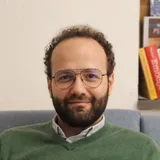
Dr Dejan Masliković

President of the Management Board

Research Associate at the Institute of Social Sciences in Belgrade, Centre for Sociological and Anthropological Research. He graduated from the Faculty of Fine Arts in Belgrade, earned an MA in Interculturalism, Arts Management and Mediation in the Balkans at the University of Arts in 2010, and received his PhD from the University of Belgrade in 2016 with a thesis on digital technology and the inclusive society.

He served as Chief of Staff to the Minister of Culture (2005–2007), Assistant Director of Affairs at the Serbian Academy of Sciences and Arts (2007–2016) and Assistant Minister of Culture. He is the author of the monograph The Role of Information and Communication Technology in the Development of an Inclusive Society (ProForma, 2015) and more than 20 papers on accessibility, persons with disabilities, cultural heritage and artificial intelligence.

Photo: Milovan Milenković

Prof. Dr Đorđe Kadijević

Team member

Prof. Dr Đorđe M. Kadijević is a Research Professor at the Mathematical Institute of the Serbian Academy of Sciences and Arts – the highest research title in Serbia, which he obtained in 2006 – and one of the country’s most cited researchers in education (more than 1,800 citations on Google Scholar). He holds two doctorates: in computer science education from the University of Novi Sad (1995) and in mathematics education from the University of Joensuu, Finland (2004).

For more than ten years, until his retirement in 2024, he worked at the Institute for Educational Research in Belgrade, researching the teaching of mathematics, computer science and statistics. His work covers digital competences, computational and algorithmic thinking, the use of artificial intelligence in learning, data literacy and access to information for persons with disabilities.

He has extensive experience in international and European projects: he was the national research coordinator for Serbia in TIMSS 2003, a member of the advisory board of the European project Computational Thinking Learning Environment for Teachers in Europe (2020–2023), and, through the EU TEMPUS programme, worked with the University of Joensuu and took part in the TEMIT project. He completed further training at the Department of Computer Science of the University of Copenhagen and the Faculty of Education of the University of Joensuu.

For two decades he has served on the editorial board of the Journal of Computer Assisted Learning and reviews for leading journals, including the Journal for Research in Mathematics Education and Computers & Education. He has taken part in more than fifty international conferences, served on the programme committees of almost forty conferences in fifteen countries, gave an invited lecture at the “Mathematics in Education” mini-symposium of the 8th European Congress of Mathematics (2021), and co-organised topic study groups on computational thinking at the International Congresses on Mathematical Education ICME-14 (2021) and ICME-15 (2024). He publishes with Springer, Routledge, Elsevier and Wiley.

He is a member of IFIP Technical Committee on Education working groups 3.1, 3.3 and 3.9, the International Association for Statistical Education (IASE) and the Education Board of the Serbian Academy of Sciences and Arts. At ProForma he contributes to the scientific foundation of projects, research and evaluation methodology, and links with the international academic community.

Selected works

  1. Kadijevich, Dj. M., Angeli, C., & Schulte, C. (Eds.) (2013). Improving Computer Science Education. New York – London: Routledge.
  2. Kadijevich, D. M., Stephens, M., & Rafiepour, A. (2023). Emergence of computational/algorithmic thinking and its impact on the mathematics curriculum. In Y. Shimizu & R. Vithal (Eds.), Mathematics Curriculum Reforms Around the World: The 24th ICMI Study (pp. 375–388). Cham: Springer.
  3. Kadijevich, D. M., Gutvajn, N., & Ljubojevic, D. (2024). Fostering twenty-first century digital skills by the means of educational platforms in the times of COVID-19. Interactive Learning Environments, 32(7), 3388–3397.
  4. Kadijevich, Dj. M., Masliković, D., & Tomić, B. M. (2022). Familiarity with state regulations regarding access to information for persons with disabilities in Serbia. International Journal of Disability, Development and Education, 69(5), 1715–1725.
  5. Maslikovic, D., Tomic, B. M., & Kadijevich, D. M. (2026). Factors influencing accessibility in judicial institutions for people with disabilities: A study of the Serbian judicial system. Humanities and Social Sciences Communications, 13, 477.

Natalija Vulikić, MA

Team member

Natalija Vulikić is an IT specialist and expert in the digitisation of cultural heritage with almost twenty years of experience in the public cultural sector. Her education combines information technology, management and culture: she graduated from the Higher Business School in Novi Sad (IT), studied IT management at the Faculty of Management of Union – Nikola Tesla University, and completed a master’s degree in Cultural Tourism at the Faculty of Sciences, University of Novi Sad (2024).

She began her career as an IT teacher. Since 2006 she has worked in the Central Service of the Museum of Vojvodina, where since 2007 she has led and carried out cultural heritage digitisation projects; from 2022 to 2024 she was the Museum’s programme director. She is one of the authors of the museum information system JIS, the software package ZIMUS and the TIMUS application, and took part in developing the national platforms Cultural Heritage Search of the Republic of Serbia, E-Museum and E-Exhibitions, as well as digital educational content such as the Museum E-Know-It-All app and the interactive comic “The Golden Helmet”.

She set up the Museum of Vojvodina’s digitisation team and, from 2017 to 2021, led the introduction of JIS and the training of professionals in institutions protecting movable cultural heritage in Serbia and Republika Srpska, at 89 locations. She gained public administration experience as a member of commissions drafting by-laws, guidelines and procedures for the digitisation and protection of cultural property, as a member of the Information and Documentation Commission of the Institute for Standardization of Serbia, and of the standing Commission for Professional Supervision of the Museum of Vojvodina’s Central Service.

She has led and taken part in the projects “Digitisation has arrived – in museums”, “Cultural Treasures of Vojvodina Online”, “Cultural Treasures of Novi Sad Online” and the digitisation of the documentation of the Institute for the Protection of Cultural Monuments of the City of Novi Sad, and has given numerous lectures and seminars on the digitisation of movable and immovable heritage. At ProForma she brings together technical knowledge, staff training and cultural project management to make cultural heritage more visible, accessible and open to all.

Selected works and professional contributions

  1. Neškov Repić, I., Zeković, A., Vulikić, N. (2015). Digitalizacija kulturnih dobara. Novi Sad.
  2. Vulikić, N. (2007). Formiranje elektronske baze podataka u Muzeju Vojvodine (professional paper). Novi Sad: Museum of Vojvodina.
  3. Vulikić, N. (2018). Digitisation has arrived – in museums, institutes for the protection of cultural monuments and archives (lecture and presentation).
  4. Member of the commission drafting the Guidelines for the Digitisation of Cultural Heritage of the Republic of Serbia (Ministry of Culture and Information, 2017).
  5. Member of the commission drafting the Procedure, with examples, for issuing decisions establishing the status of cultural property for museum objects.

Slađana Bojković

Team member

Slađana Bojković is a museum advisor at the Historical Museum of Serbia, where since 2013 she has headed the Communication, later Documentation, Department. She graduated in history from the Faculty of Philosophy in Belgrade in 1987. From 1988 to 1995 she worked as an archivist at the Military Archives, on the records of the Army of the Kingdom of Serbia and the Army of the Kingdom of Yugoslavia (1840–1941), and later as head of the reading room and card catalogue. In 1990 she completed the specialist course for archive professionals at the Archives of Serbia.

She has worked at the Historical Museum of Serbia since 1996, in the Documentation Service. She became a senior curator in 2004 and a museum advisor in 2013. From 2007 to 2012 she was head of the Core Activities Service, deputy director and a member of the Museum’s Management Board. She is a member of the editorial boards of the Historical Museum of Serbia’s journal and its special editions, and of the publication series The Obrenović Dynasty in Museum and Other Collections of Serbia; she was also a member of the editorial board of the Museum of Yugoslav History.

Museum documentation and information systems

Her work on museum documentation covers collecting, recording and processing documentation on museum objects, integrating it into information systems, developing standards for processing museum objects and applying modern methods of computer data processing. Together with a group of IT specialists, she took part in developing ISMUS, a program for processing museum objects later renamed the Unified Information System for Museums (JIS), which has been introduced in museums across Serbia. She was a member of the museum section of the project team for the Museum Information System of Serbia (MISS) and a consultant on the databases of the Serbian Academy of Sciences and Arts, of the victims of the Auschwitz-Birkenau camp and of the victims of the Staro Sajmište camp. She was a member of the working group that drafted the Law on Museum Activity (2020–2021).

International cooperation

She represents the Historical Museum of Serbia in the International Association of Museums of History. She was a member of the Association’s Administrative Board from 2004, of its Executive Board from 2006 and its vice-president from 2009, and served as its president from 2012 to 2024. In 2008 she organised the Association’s 8th International Colloquium, hosted by the Historical Museum of Serbia, on the theme Museums as Places of Reconciliation.

She has taken part in the Association’s annual international workshops Museum Professionals in Dialogue in Geneva, Ghent, Lyon, Lucerne, Basel, Marseille, Athens, Milan, Belgrade, Lausanne, Luxembourg, Vilnius, Paris and Thessaloniki (2008–2026), in the Association’s colloquia in Finland, Brazil, Serbia and Germany, and in conferences of ICOM’s International Committee for Museums and Collections of Archaeology and History (ICMAH) in Amsterdam, Vienna and Helsinki. As the Association’s representative, she attended as an observer the intergovernmental meeting of experts at UNESCO headquarters in Paris that worked on the draft Recommendation concerning the Protection and Promotion of Museums and Collections.

Auschwitz-Birkenau

From 2011 to 2015 she coordinated the project New Permanent Exhibition of the Republic of Serbia at the Auschwitz-Birkenau State Museum and administered the database of victims of the Auschwitz concentration camp. She took part in the regional meeting Holocaust Education and Intercultural Understanding in South-East Europe: Renewing the Former Yugoslav Pavilion at Auschwitz-Birkenau and in the work of a research group at Yad Vashem in Jerusalem.

She is fluent in English and holds the title of English translator-interpreter.

Yamen Hrekes

Team member

Yamen Hrekes is a psychologist and integrative psychotherapist with more than seventeen years of experience in international organisations, and an expert in mental health and psychosocial support (MHPSS), migration and intercultural relations. His education lies at the intersection of engineering and the social sciences: he studied electrical engineering and telecommunications at the University of Aleppo and graduated in psychology from the Faculty of Philosophy, University of Banja Luka. After five years of intensive training in transactional analysis he obtained the title of practitioner under supervision, and after four and a half years of advanced training at the BHIDAPA Academy for Psychotherapy he qualified as an integrative psychotherapist in line with European standards.

He began his career at the International Organization for Migration (IOM) as a cultural mediator, building bridges between local communities and migrants, and today works at the IOM as national coordinator for mental health and psychosocial support and protection. He has designed and led numerous local and international mental health protection projects and programmes for refugees, migrants, vulnerable groups and people in crisis.

He has almost ten years of psychotherapy practice, which he now carries out privately and through the Psihoterapija.app platform within the Academy for Psychotherapy, using an integrative relational approach focused on psychological resilience, identity development and interpersonal relationships. He speaks Bosnian, Serbian, Croatian, English and Arabic fluently. At ProForma he contributes to inclusion and accessibility projects with his knowledge of working with vulnerable groups, culturally sensitive approaches and international cooperation.

Areas of expertise

  • Mental health and psychosocial support (MHPSS) and protection of vulnerable groups
  • Migration, work with refugees and intercultural mediation
  • Designing and leading international projects and programmes
  • Integrative psychotherapy and transactional analysis
  • Psychological resilience, crisis intervention and inclusive, culturally sensitive approaches

Đuro Radović, MA

Team member

Đuro Radović is an electrical and computer engineer with a master’s degree in project management and experience in digital transformation, culture, healthcare and the use of technologies that support the accessibility and inclusion of persons with disabilities.

At ProForma he has designed and taken part in workshops that build the capacity of media professionals to produce programmes adapted for blind, partially sighted, deaf and hard of hearing people. Through cooperation with the International Telecommunication Union (ITU), he has also taken part in training on accessible information and communication technologies and digital inclusion.

During his career he has served as Assistant Minister of Health for the management of digitalisation in healthcare, Technical Director of the Institute for Mother and Child Health Care of Serbia “Dr Vukan Čupić”, and Head of the Digitalisation Group at the Ministry of Culture and Information.

He is currently Technical Director of Audiovox, which represents the Danish hearing aid brand Oticon and Interacoustics diagnostic equipment for audiology and vestibular diagnostics in the region. His work combines technical expertise with support for people with hearing impairments, through solutions that make communication easier, improve quality of life and enable more equal participation in society.

Dragan Tadić

Team member

Dragan Tadić holds a master’s degree in management and is director and editor-in-chief of several media outlets of the Serbian Orthodox Church: Radio Iskon of the Eparchy of Vranje, the newspaper Slovo ljubve of the Archdiocese of Belgrade and Karlovci, and Radio Glas of the Eparchy of Niš.

Digitisation projects

He has led and taken part in several digitisation projects:

  • the Monastery of St Prohor Pčinjski – frescoes of the altar area;
  • the iconostasis of the Cathedral Church in Vranje;
  • digitisation of church objects of the Ruma deanery of the Eparchy of Srem;
  • the Electronic Schematism of the Eparchy of Vranje (all churches and monasteries);
  • the Electronic Schematism of the eparchies of the Serbian Orthodox Church in Serbia;
  • project lead for recording virtual tours of churches of the Archdiocese of Belgrade and Karlovci, and for digital maps of the Serbian Orthodox Church.

Culture and events

As the culture representative of Patriarch Irinej and director of the AEM Project Centre, he organised several concerts and academies under the patronage of the late Patriarch Irinej. He initiated and organised a series of exhibitions and St Sava academies under the patronage of the Eparchy of Vranje. As the representative of Bishop Lavrentije of Šabac, he organised several inter-Christian and inter-religious gatherings.

Humanitarian work

At International Orthodox Christian Charities (IOCC) he worked for five years as project assistant and project officer, and for four months as deputy chief in Kosovo and Metohija, on capacity building for non-governmental organisations in Serbia. One of the most demanding projects he took part in was “Comprehensive Assistance to Older People in Serbia”, which involved 20 NGOs.

Our mission

To advance social development by connecting science, culture and modern technologies, promoting accessibility and inclusion, and encouraging interdisciplinary cooperation.

Our vision

A society in which knowledge, culture and technology are accessible to everyone, and in which research and innovation contribute to equal opportunities, responsible development and the preservation of cultural values.

Experience and cooperation

ProForma brings together researchers, university teachers and experts with experience in the social sciences, culture, public policy, information technology, communications and project management. Through research, publishing, conferences and educational programmes we connect academic knowledge with the concrete needs of society.

The association has worked with the International Telecommunication Union (ITU), government institutions, research institutions and organisations in culture and social inclusion. It has particular expertise in the accessibility of ICT, media content and cultural programmes for persons with disabilities, while digital transformation and the social consequences of artificial intelligence play an increasingly important role in its members’ work.

We are open to cooperation with institutions, research organisations, businesses and civil society organisations in Serbia, the region and abroad.

Support our work

You can donate by bank transfer to the association’s account. Every contribution helps us continue our work. Thank you!

Recipient
ProForma Citizens’ Association
Vardarska 20, 11118 Belgrade
Account number (Serbia)
160-6000001634677-47
Bank
Banca Intesa a.d. Beograd
Payment reference
Donation

For a donation receipt or other ways to support us, write to info@proforma.rs.